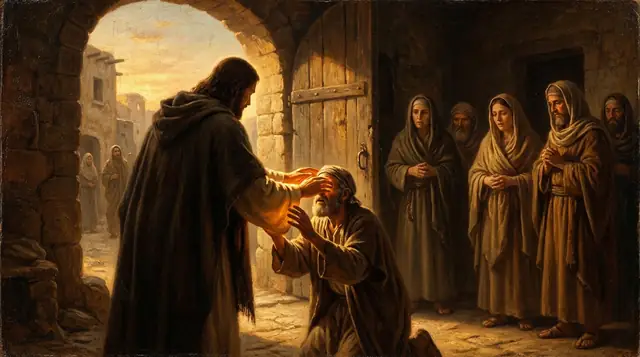

Search for Bible verses about strength and the results split into two piles. One decorates gym mirrors and goal-planner covers, Philippians 4:13 stretched over a photo of a hard workout. The other is what the actual passages are doing, and it is a different claim than the poster makes. None of the texts below describe strength a person generates by trying harder or believing more. Every one of them describes strength that arrives, from outside, usually to someone who has already run out.
That distinction matters because strength verses get used two ways that pull against each other: as fuel for pushing through anything, and as a private measure of spiritual failure when pushing through does not work. The fifteen passages here, read with what surrounds them, do neither. They describe where the strength comes from, and more than once they place it inside weakness rather than after it ends.
Philippians 4:11-13
“I can do all things through Christ who gives me strength.”
Lifted alone, verse 13 reads like a promise of unlimited capability. Paul does not leave it alone. The two verses before it are the sentence's actual subject: he has learned to be content whether he has plenty or nothing, whether he is full or hungry. The 'all things' in verse 13 names the specific ability to stay steady in both directions, in abundance and in need, without being ruled by either. Paul writes this from prison, which is its own argument against reading the verse as a formula for winning. The strength he names is for enduring scarcity with contentment. Read as a performance slogan, the verse promises close to the opposite of what it is doing.
Isaiah 40:29-31
“But those who wait upon the LORD will renew their strength; they will mount up with wings like eagles; they will run and not grow weary, they will walk and not faint.”
The verses before it name who this is for: the faint and the weak, not the disciplined or the deserving (verse 29). Verse 30 goes further and says even young men, at the peak of physical strength, grow tired and stumble: the text specifically rules out youth and vigor as an exemption. What renews strength is waiting, not effort, and Isaiah wrote this to people worn down by exile, telling them that the strength they lacked was never theirs to manufacture in the first place.
2 Corinthians 12:9-10
“But He said to me, 'My grace is sufficient for you, for My power is perfected in weakness.'”
Paul asked three times for the thorn in his flesh to be removed, whatever it was: the text never says. The answer he received was a redefinition of where strength shows up: through the thorn staying, with the thorn still in place. Verse 10 is the harder line to sit with: he says he delights in weaknesses, because they are the specific condition under which this kind of strength becomes visible. It is one of the only biblical texts that treats an unanswered prayer as the strength verse itself, the very place where the strength shows up.
Joshua 1:9
“Have I not commanded you to be strong and courageous? Do not be afraid; do not be discouraged, for the LORD your God is with you wherever you go.”
Moses has just died, and Joshua is the one being told to lead a nation into a land Moses never entered. The command to be strong is addressed to someone about to inherit a job he did not ask for, following a leader nobody else could replace. Notice the order of the sentence: courage is commanded first, and the reason is attached immediately after, not left for Joshua to supply on his own. The strength here is obedience to a command that comes with its own reason built in, with no confidence for Joshua to generate on his own.
Psalm 46:1
“God is our refuge and strength, an ever-present help in times of trouble.”
The psalm around this line does not describe a calm morning. A few verses later the earth gives way and the mountains fall into the heart of the sea; nations are in an uproar and kingdoms fall. The refuge is offered inside the catastrophe, present tense, while the ground is still moving. That is the specific claim of verse 1: an ever-present help, available while the trouble is happening.
Nehemiah 8:10
“Then Nehemiah told them, 'Go and eat what is rich, drink what is sweet, and send out portions to those who have nothing prepared, since today is holy to our Lord. Do not grieve, for the joy of the LORD is your strength.'”
The context makes the line stranger than it sounds on its own. The people are weeping (the verse before this one says so plainly) because they have just heard the Law read aloud for the first time in a generation and understood how far they had drifted from it. Nehemiah asks for no forced cheerfulness to cover that grief. He tells them to eat, to share what they have with those who have nothing prepared, and names joy as the source of strength in the middle of a day that started in tears. The strength here is tied to worship and generosity, not to feeling upbeat.
Ephesians 6:10
“Finally, be strong in the Lord and in His mighty power.”
This opens the passage about armor, belt, breastplate, shield, sword, and the very next verses specify what the fight is not: 'our struggle is not against flesh and blood' (6:12). The strength commanded here is explicitly not physical and explicitly not self-supplied; every piece of armor Paul lists belongs to someone else and is put on, not built. 'In the Lord' is doing real work in the sentence. It names the location the strength is found in, not a description of how strong someone already is.
Eight more, briefly
- Deuteronomy 31:6: the same command Joshua later receives, first spoken to the whole nation by Moses before he hands off leadership.
- Psalm 28:7, strength named alongside trust and help, in a psalm that opens by begging God not to stay silent.
- Isaiah 41:10, strengthening promised together with fear removed, spoken to a nation, not an individual having a hard week.
- Psalm 27:1, 'stronghold' as the word for strength, in a psalm written by someone facing enemies described besieging him a few verses later.
- Habakkuk 3:19, strength described as sure footing on high, dangerous ground, closing a prayer that spent its first two chapters demanding an explanation from God.
- 2 Corinthians 4:16-18, strength located in an inner self renewed daily, while the outer self is described, without softening, as wasting away.
- Psalm 73:26, written by someone who says his flesh and heart may fail, and that admission is the premise the verse is built on.
- 1 Chronicles 16:11, strength paired with seeking God's presence continually, in a song appointed for the day the ark reached Jerusalem.
Which strength verse fits which situation?
| When you need strength for | Verse | What it offers |
|---|---|---|
| A hard conversation or decision | Joshua 1:9 | A command to be courageous, followed by the reason: God is with you wherever you go. |
| A long, tiring season | Isaiah 40:31 | A picture of people who wait, get new strength and keep going. |
| Grief or heartbreak | Psalm 119:28 | A prayer for strength that starts by admitting the sorrow. |
| Feeling weak or inadequate | 2 Corinthians 12:9 | Power described as showing up in weakness. |
| A sudden crisis | Psalm 46:1 | A refuge and help that is already present. |
| A day of rejoicing and worship | Nehemiah 8:10 | Joy called a source of strength. |
| Feeling attacked or worn down | Ephesians 6:10 | Strength drawn from the Lord, with armour for the fight. |
| Answered prayer that needs thanks | Psalm 138:3 | God answered on the day I called and strengthened my soul. |
A simple way to use the table is to choose one row, read the whole chapter around the verse, and carry that one line into your day.
How do you ask God for strength?
The Psalms model this in plain language. They are short, honest and specific. Psalm 119:28 is a single sentence prayer worth copying.
“My soul melts with sorrow; strengthen me according to Your word.”
Notice what the psalmist does. He names how he feels, then asks for one thing. You can pray the same way today: tell God how heavy it is, and ask Him to strengthen you with His word.
Here is a short prayer you can use. Lord, I am tired and I need Your strength today. Give me enough for the next step, and remind me that You are near. Thank You that Your help does not run out. Amen.
What these verses are not saying
None of them say that enough faith removes exhaustion, and none of them treat weakness as something a stronger believer would not have. Paul's thorn stays. The exiles in Isaiah are still weary before they wait. The people in Nehemiah are still weeping in the same paragraph they are told to find joy. Reading these texts as a ladder, get strong enough and the hard thing stops, inverts every one of them. They describe strength that operates inside difficulty, supplied from outside a person, not strength a person builds until they no longer need help.
How to use these verses without turning them into slogans
- 01Read the paragraph, not just the line. Almost every verse here sits inside a specific hard circumstance, prison, exile, a siege, a death, an unanswered prayer, and the circumstance is part of what the verse means.
- 02Notice who is weak in the passage. Biblical strength texts are addressed to tired, frightened, or failing people far more often than to capable ones.
- 03Ask where the strength is said to come from. 'In the Lord,' 'from waiting,' 'in weakness'. These are not interchangeable, and the differences are the point.
- 04Keep the ones that fit your actual circumstance, rather than collecting all of them. A verse that matches nothing you are living through will not hold much weight when you need it to.
Keeping them together
In Terra Gospel you can highlight any of these verses in one of four colours, add your own note, and keep them together under Favourites, free, along with reading the whole Bible in English, Portuguese and Spanish and the verse of the day. Only the narrated audio Bible is part of the Premium subscription.
Two psalms speak to strength under pressure: Psalm 27 and Psalm 46. For a life shaped by it, read the story of David, and for the quieter side of strength, Bible verses about peace.