Proverbs is the most-quoted book in the Bible by people who don't know they're quoting it. "Iron sharpens iron" shows up on gym T-shirts and motivational posters without anyone tracing it back to Proverbs 27:17. The same goes for dozens of others: a line about raising kids, a line about guarding your heart, a line about trusting something you can't fully see. The trouble starts when someone tries to rank "the most popular proverbs" by numbers, because that count doesn't exist. No site tracks how many times a specific proverb gets searched, quoted from a pulpit, or shared in a text message. This guide organizes nine proverbs by moment, which one to read when, and why, and does something most lists skip: it explains the difference between a proverb and a promise, because that difference changes what each one does for the person reading it.
What the Book of Proverbs Is
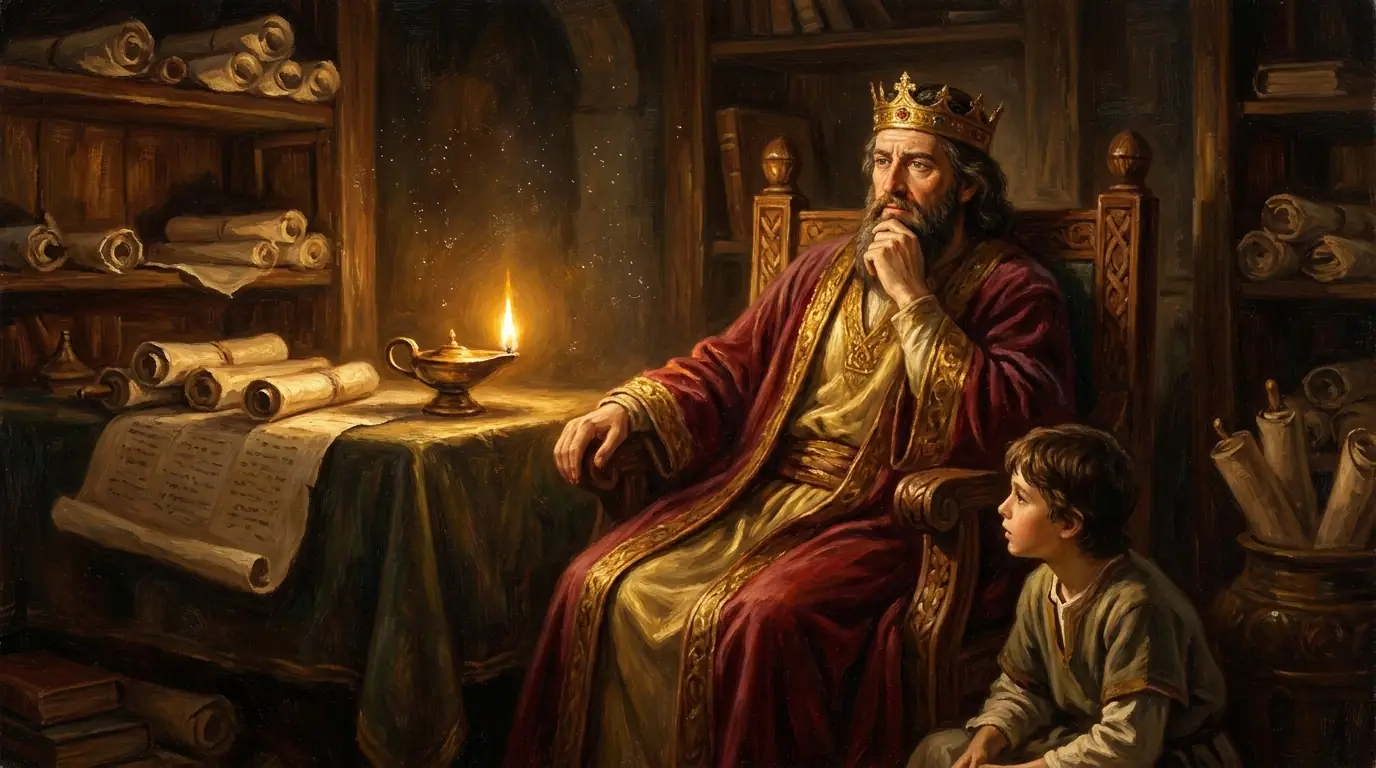
Proverbs runs 31 chapters, and tradition doesn't credit the whole book to one author. The first major section, chapters 1 through 9, longer poems about pursuing wisdom, and the second, chapters 10 through 22:16, short two-line sayings, both introduce themselves as "the proverbs of Solomon, son of David, king of Israel" (Proverbs 1:1, repeated at 10:1). A third batch, chapters 25 through 29, is also credited to Solomon, but with an editorial note attached: these were "copied by the men of Hezekiah king of Judah" (Proverbs 25:1), scribes working a generation or more after Solomon's death gathered and recorded this material, which is itself a clue that the book was assembled over time, not written in one sitting.
Between those two Solomon sections, one whole stretch, 22:17 through 24:34, shifts voice and introduces itself only as "the words of the wise" (Proverbs 22:17), with no name attached at all; the same attribution is repeated explicitly at 24:23, with a second batch of sayings still credited to the wise. And the book closes with two blocks of explicitly different authorship: chapter 30 carries "the words of Agur son of Jakeh" (Proverbs 30:1), a figure the Bible says nothing else about beyond the name; and chapter 31 carries "the words of King Lemuel, an oracle his mother taught him" (Proverbs 31:1): an entire proverb, in other words, credited to a mother's instruction to her own son. The honest reading matches Psalms: Proverbs is a collection of Hebrew wisdom, with at least four named sources, Solomon, the anonymous sages, Agur, and Lemuel, assembled and edited across generations, not the work of one person.
What a Proverb Is, and Isn't
A biblical proverb is a general principle, not a guaranteed promise, and that difference changes how every saying below should be read. A principle describes how wisdom tends to play out most of the time, in ordinary life, when things follow their normal course; a promise is an unconditional commitment, the kind Scripture reserves for other genres of text, like covenants and direct prophecy. Proverbs itself signals that difference from the inside, side by side: "Do not answer a fool according to his folly, or you yourself will be like him" (Proverbs 26:4) is followed, in the very next verse, by "Answer a fool according to his folly, lest he become wise in his own eyes" (Proverbs 26:5). Read as fixed law, the two verses contradict each other. Read as what they are, two principles that apply to different situations, and it's up to the reader to discern which one fits which moment, they make complete sense. That's the same lens that applies to 22:6, the most-quoted proverb about raising children: it describes a real, strong tendency, not a mechanical guarantee, and a parent whose grown child walked away from faith didn't fail against a broken promise from God. They came up, at worst, against the part of the statistic that was never 100 percent.
Which Proverb to Read for Each Moment
The list below follows that logic of moment, not ranking. For each theme: the proverb, the reference, and what it actually says, without stretching more certainty out of the text than it offers.
Trust and a hard decision: Proverbs 3:5-6
“Trust in the LORD with all your heart, and lean not on your own understanding;”
“in all your ways acknowledge Him, and He will make your paths straight.”
It's probably the single most-quoted proverb in the whole Bible at decision points: a job change, a fork in the road, any situation where the information on hand isn't enough to decide with certainty. The verse promises direction after the decision, for someone who has already chosen to trust instead of leaning only on their own math, with the path allowed to look unclear beforehand. That's why it shows up as much in moments of doubt as in moments of regret over a choice that went wrong. It works on both sides of the decision, not just before it.
Words: Proverbs 15:1 and 18:21
“A gentle answer turns away wrath, but a harsh word stirs up anger.”
“Life and death are in the power of the tongue, and those who love it will eat its fruit.”
The two proverbs cover the same ground from different angles. The first is practical, almost a conflict-management manual: in an argument that's heating up, tone matters more than content: a gentle answer means not feeding the fire, and it can still disagree. The second is more radical in its imagery: it places words in the same category of power as life and death, the kind of claim Proverbs reserves for very few subjects. Together, the two verses back most of what gets taught today about speaking with intention instead of speaking on impulse.
Work: Proverbs 16:3
“Commit your works to the LORD and your plans will be achieved.”
It's the proverb for someone mid-project, mid-career-change, or mid-business decision without yet knowing whether it'll work out. The word rendered "commit" in the original Hebrew carries the sense of "roll" or "hand over the weight": the image is unloading a burden onto someone stronger, not standing still and waiting. The verse promises steady thinking for someone who hands the outcome to God instead of carrying the anxiety over that outcome alone, with success in that specific project left open.
Friendship: Proverbs 17:17 and 27:17
“A friend loves at all times, and a brother is born for adversity.”
“As iron sharpens iron, so one man sharpens another.”
17:17 defines friendship by the simplest test there is: love that lasts through the bad moment, not just the good one. 27:17 goes somewhere different: it's about productive friction. Two pieces of iron sharpen through real contact, and the image suggests a genuine friend also disagrees, questions, and corrects, beyond simply agreeing. That's why the two verses so often show up together in talks about friendship: one covers the side of unconditional support, the other covers the side of necessary challenge, and neither one alone describes the whole thing.
Pride: Proverbs 16:18
“Pride goes before destruction, and a haughty spirit before a fall.”
It's the reference proverb for anyone who's watched, in their own life or someone close to them, success turn into a fall right after pride took over. The verse says that pride tends to precede a fall, an observed pattern that works as no equation and leaves room for falls with other causes. The structure of the two lines repeats the same idea from two angles, arrogance and destruction, a haughty spirit and a fall, a common move in Proverbs' poetry that reinforces the warning instead of adding new information.
Heart: Proverbs 4:23
“Guard your heart with all diligence, for from it flow springs of life.”
In Hebrew vocabulary, "heart" covers more than feeling. It's the person's decision-making center, closer to what would today be called character or will. The verse sits in the middle of an entire chapter of a father instructing his son, and the logic is cause and effect: everything a person does flows from the inside out. Guarding the heart, in context, means watching what gets let in (what's heard, what's read, who someone spends time with) because that's what the rest flows from.
Money: Proverbs 22:7
“The rich rule over the poor, and the borrower is slave to the lender.”
It's one of the proverbs most quoted outside a religious setting, in personal-finance talks and debt videos. The text condemns no borrowing in itself (Proverbs deals with money in several other verses without that tone). It describes a real power relationship: whoever owes ends up, in practice, in a position of dependence on whoever lent, even without a formal contract saying so. It's observation: the book never orders anyone to avoid borrowing, and it names the power imbalance that debt creates.
Raising Children: Proverbs 22:6
“Train up a child in the way he should go, and when he is old he will not depart from it.”
It's the most-quoted proverb about raising children, and also the most misread. Read as a promise, it turns into a formula: raise them right and the outcome is locked in, which leaves parents whose kids walked away from faith carrying guilt the text never promised to settle. Read through the lens Proverbs 26:4-5 already teaches, the verse describes a real, strong tendency, how a child gets raised weighs heavily, and it weighs a lot, on the adult path ahead, without turning into a closed equation. The Hebrew word rendered "the way he should go" can also mean the child's own way, their individual bent, which opens a second reading: training according to who the child actually is, not just imposing one single track on every kid.
The Excellent Wife: Proverbs 31
“A wife of noble character, who can find? She is far more precious than rubies.”
Chapter 31 closes the book with an entire poem (an acrostic in the original Hebrew, each of its 22 lines opening with a different letter of the alphabet, in order) describing a woman running a business, land, a household, and charity all at once. It's dense enough to earn its own verse-by-verse guide instead of a squeezed summary here; the point of this hub is to place it and to show why chapter 31 belongs to the same wisdom tradition as Agur and Lemuel, not to compete with a study built just for it.
How to Read Proverbs
Proverbs reads differently from Psalms. Psalms is prayer poetry, and works best read slowly, one poem at a time, hunting for whichever one fits the moment at hand. Proverbs, especially from chapter 10 on, is a collection of short, independent sayings, sometimes with no connection at all from one verse to the next inside the same chapter, which makes the book strangely easy to read in fixed doses: one chapter a day, with the 31 chapters lining up almost exactly with a month. It's an old reading rhythm, common in Bible reading plans for centuries, and it works well precisely because the book has no storyline that would get lost being sliced that way: every chapter stands on its own, and every month starts back at chapter 1.
The shape of the poetry shifts across the book too. Chapters 1 through 9 carry longer poems, a single argument building across several verses: a father talking his son into pursuing wisdom instead of bad company. From chapter 10 on, the normal unit is the couplet: two lines, almost always in antithetic parallelism, one setting the wise against the fool, the righteous against the wicked, the right answer against the wrong one: the same contrast structure that closes, for instance, Psalm 1. Spotting that pattern makes for faster reading: the second line lights up the first from the opposite angle and almost never adds new information.
Which proverb fits which everyday question?
Proverbs is a book about ordinary life, so this table starts with the question you might be asking on a normal day.
| Everyday question | Proverb | What it says in short |
|---|---|---|
| How do I make a decision? | Proverbs 3:5-6 | Trust the LORD with everything and He will direct the road. |
| How do I calm an argument? | Proverbs 15:1 | A gentle answer turns anger away, and a harsh word stirs it up. |
| How careful should I be with my words? | Proverbs 18:21 | Words carry power over life and death. |
| Where do I place my plans? | Proverbs 16:3 | Commit your work to the LORD. |
| What does a real friend do? | Proverbs 17:17 | A friend loves at all times, and family is born for hard days. |
| Who should sharpen me? | Proverbs 27:17 | People sharpen each other, like iron on iron. |
| Am I proud? | Proverbs 16:18 | Pride shows up before a fall. |
| What should I protect most? | Proverbs 4:23 | Guard your heart, because life flows from it. |
| What about debt? | Proverbs 22:7 | The borrower serves the lender. |
| How do I raise children? | Proverbs 22:6 | Train them early in the way they should go. |
Keeping It All Together
In Terra Gospel you can highlight any proverb in one of four colors, write your own note, and save it all to Favorites, useful here especially, in a book of short, independent sayings where it's easy to lose track of which verse helped last time in a hard conversation. Reading, highlighting, notes, favorites, and the verse of the day are free in English, Portuguese, and Spanish; the narrated Bible is part of Premium. The guide to Bible verses about strength and the Bible reading plan, for anyone who wants to fold Proverbs into a broader daily routine, are linked below.
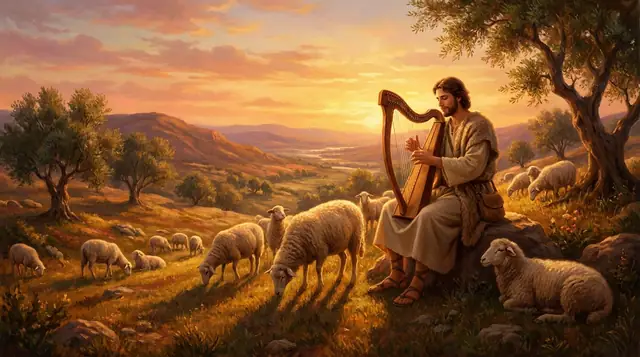
The Psalms sit right beside Proverbs in the canon, and the most popular psalms covers the best-known ones. Wisdom also shows up in stories, so read the story of Joseph and the story of David, and keep short Bible verses for lines you want to share.