Faith is one of those words that has drifted. In ordinary English it often means believing something without evidence. Neither the Hebrew nor the Greek behind it works that way. The Hebrew emunah is built on a root meaning firmness or reliability. It is used of hands held steady and of a pillar that holds. The Greek pistis means trust, and in the ancient world it was equally at home in contracts and friendships: the confidence you place in someone who has proved dependable.
Read with that in mind, the verses below stop being about the strength of an inner conviction and start being about the reliability of the one trusted.
Verses that define faith
“Now faith is the assurance of what we hope for and the certainty of what we do not see.”
The chapter that follows is a list: Abel, Noah, Abraham, Sarah, Moses, Rahab. Hebrews defines faith and then immediately shows it as a series of things people did, several of them without any resolution in their lifetime, verse 39 says plainly that they did not receive what was promised.
“But the righteous will live by faith.”
Habakkuk says this while complaining to God about injustice going unanswered. Paul quotes it twice (Romans 1:17, Galatians 3:11) and Hebrews once, which makes it one of the load-bearing sentences of the New Testament, and it began as an answer to a protest.
- 2 Corinthians 5:7, walking by faith, not by sight; a description of how to proceed, not of what to feel.
- Romans 10:17, faith comes from hearing; it has a source outside the believer.
- Ephesians 2:8-9, faith itself described as a gift, which removes it from the list of personal achievements.
Which faith verse fits which day?
Most people search for faith verses on a particular day, with a particular problem. The table below matches ten common situations to a passage and says in one line why it fits.
| Your situation | Verse | Why it fits |
|---|---|---|
| You are afraid right now | Psalm 56:3 | It is one sentence and it is honest: the fear is admitted first, then the trust. |
| You cannot see how this ends | 2 Corinthians 5:7 | Paul describes how to keep walking when the road is hidden. |
| You doubt your own faith | Mark 9:24 | A father admits his doubt out loud and Jesus answers him anyway. |
| You are waiting on a long prayer | Psalm 27:13-14 | David repeats the command to wait, which tells you he needed to hear it twice. |
| You feel far from God | Hebrews 12:2 | It gives you one place to look: Jesus, who starts faith and finishes it. |
| You failed and feel disqualified | Luke 22:32 | Jesus prays for Peter's faith before Peter falls, and gives him a job afterwards. |
| You need courage for a decision | Proverbs 3:5-6 | It names the two moves: trust with all your heart and acknowledge Him in your ways. |
| You want to pray with expectation | Matthew 21:22 | It links faith and prayer in a single sentence. |
| You are tired of the struggle | 1 John 5:4 | Faith is called the victory that has already overcome the world. |
| You want hope to overflow | Romans 15:13 | It asks God to fill you with joy and peace as you go on believing. |
What does faith look like when you are afraid?
Fear and faith often sit in the same room. The Bible never asks a person to feel nothing before trusting. Psalm 56:3 puts the two side by side.
“When I am afraid, I put my trust in You.”
David wrote that line while held by enemies in a Philistine city. When the fear arrives, he knows where to send it. That is a practical picture of faith: a habit of turning toward someone dependable at the moment the fear shows up.
Mark 4 gives the same picture in a boat. The storm is real, the disciples are frightened, and Jesus asks them a question: "Why are you so afraid?" The question invites them to look at who is in the boat with them.
Is faith a feeling?
A lot of people quietly assume so. They wait to feel sure before they pray, before they show up at church, before they open the Bible. The passages above point elsewhere. Abraham's faith, in Genesis 15:6, is described in a sentence with a plain verb.
“Abram believed the LORD, and it was credited to him as righteousness.”
Believing the LORD is a decision to take someone at his word. Feelings come and go across a week. A decision can stay in place through all of them. Many long-time believers describe their faith as something they keep choosing on ordinary Tuesdays, when nothing dramatic is happening.
People of faith in the Bible and what they did
Hebrews 11 is a good place to see faith with its hands and feet. Each name in the list is attached to an action.
| Person | What they did | Where to read it |
|---|---|---|
| Noah | Built a boat on dry land after a warning about rain no one had seen | Genesis 6 to 9 |
| Abraham | Left home without a destination and later trusted God about a promised son | Genesis 12 and 15 |
| Sarah | Counted on the one who made the promise, even when the promise seemed too late | Hebrews 11:11 |
| Moses | Chose to stand with his people and left a palace behind | Exodus 2 to 3 |
| Rahab | Hid the spies because she believed the God of Israel was real | Joshua 2 |
| The centurion | Asked Jesus to heal a servant with a word from a distance | Matthew 8:5-13 |
The list is mixed on purpose. There are patriarchs and a foreigner, a woman with a shaky reputation and a Roman officer. The common thread is that each one acted on what they trusted about God before the outcome was visible.
Common mistakes about faith
- Measuring it by intensity. The mustard seed teaching in Matthew 17 sends you looking at the size of the object trusted, and the size of the seed matters very little.
- Treating doubt as the end of faith. Mark 9:24 and John 20:24-29 both show doubt being met with patience.
- Waiting for certainty before taking a step. Hebrews 11 lists people who walked first and understood later.
- Comparing your faith to someone else's story. Peter's faith and Thomas's faith looked very different and Jesus dealt gently with both.
- Believing that faith guarantees an easy road. Hebrews 11:35-38 talks about people who suffered greatly and are still counted as people of faith.
How can you practise faith this week?
- 01Pick one verse from the table above and read it aloud each morning for seven days.
- 02Write down one thing you are trusting God with, and date it. Look at the note again in a month.
- 03Tell one trusted person about a doubt you carry. Doubt spoken to a friend usually gets smaller.
- 04Take one small action that fits what you believe, such as a phone call, an apology or an act of generosity.
A short prayer for faith
If you would like words for the moment, this prayer is short enough to remember. Lord, I trust You with what I can see and with what I cannot. Help my unbelief. Give me one step for today and the courage to take it. Thank You that Your faithfulness has no end. Amen.
Verses about small faith
“For truly I tell you, if you have faith the size of a mustard seed, you can say to this mountain, 'Move from here to there,' and it will move.”
Frequently read as a demand for more faith; the sentence says the opposite. The point of the mustard seed is smallness. What matters is what the faith is attached to.
- Mark 9:24, 'I do believe; help my unbelief!': a prayer answered as it stands, honest about the mixture.
- Luke 17:5-6: the apostles ask for more faith and are told the seed-sized amount is enough.
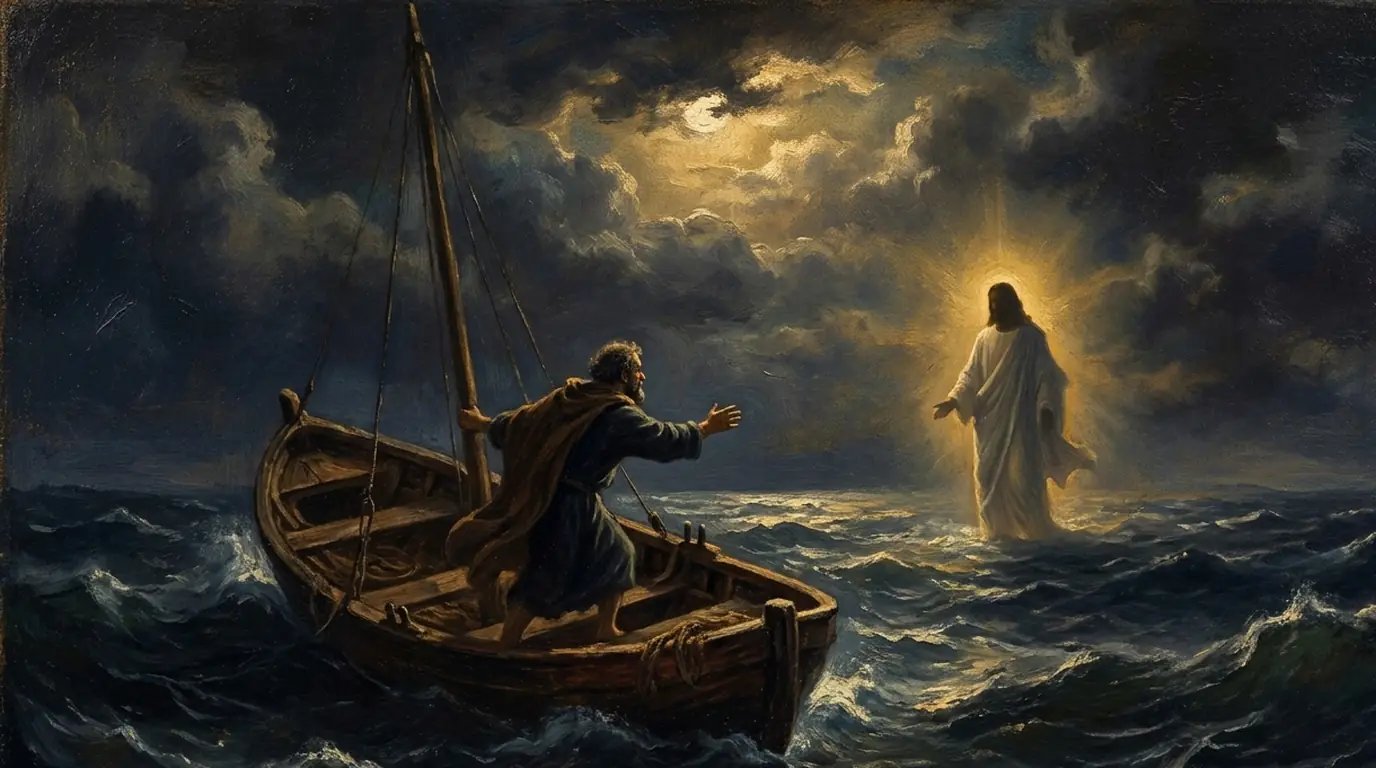
- Matthew 14:31, 'you of little faith' said to the only disciple who got out of the boat.
Verses about tested faith
“Consider it pure joy, my brothers, when you encounter trials of many kinds, because you know that the testing of your faith develops perseverance.”
James says the testing produces something, and that the something is endurance, with no claim that the trials themselves are good. 1 Peter 1:6-7 makes the same claim with a different image: gold refined by fire.
- Job 13:15, trust maintained inside a complaint, not instead of one.
- Habakkuk 3:17-18, rejoicing specified for the year the crops fail.
- 2 Corinthians 12:9-10, strength described as being made perfect in weakness, in a passage about an unanswered prayer.
Verses about faith that acts
“So too, faith by itself, if it does not result in action, is dead.”
James and Paul are often set against each other here, and they are answering different questions. Paul is asking what makes a person right with God; James is asking how you can tell that faith is real. Both use Abraham as the example, which suggests neither thought he was contradicting the other.
- Galatians 5:6, faith expressing itself through love.
- Hebrews 11:8: Abraham going out without knowing where he was going.
- Matthew 8:5-13: the centurion's faith praised as understanding authority, not as intensity of feeling.
Verses about growing faith
- Romans 4:20-21: Abraham strengthened in faith while fully aware of the biological problem.
- Colossians 2:6-7, rooted and built up, a metaphor of slow growth rather than sudden arrival.
- 1 Thessalonians 3:10: Paul praying to supply what is lacking in their faith, which assumes it can be incomplete.
- Jude 20, building yourselves up in your most holy faith; something done, not waited for.
How to read a faith passage
- 01Ask whether the passage is about trust in a person or about the content of a belief. Both exist in Scripture and they behave differently.
- 02Notice the circumstances. A remarkable number of the great faith texts were written in exile, prison or crop failure.
- 03Watch for the object. Biblical faith always has an object: it is faith in someone.
- 04Resist quantity language. The seed-sized faith of Matthew 17 is the corrective.
Keeping the ones that hold
In Terra Gospel you can highlight verses in four colours, attach your own note, and keep them together under Favourites, free, along with reading the whole Bible in English, Portuguese and Spanish and the verse of the day. Only the narrated audio Bible is part of the Premium subscription.
Faith grows in small daily steps, and the verse of the day is a good place to take them. When faith is tested, Bible verses about strength speaks to the pressure, and the Bible reading plan for beginners shows where to start if you want to read the sources yourself.