Most books of the Bible carry a name somewhere: Moses, David, Isaiah, Paul. Others carry none, and a few have authors nobody can identify with certainty. The question sounds simple. It has a short answer and a long one, and the long one is worth knowing.
This page gives both. First the direct answer, then a big table of books and their authors, and finally the road these words traveled to reach a modern English translation. We will keep three things apart that often get blended together: what tradition says, what the text itself says, and what remains under debate. Open questions stay open here, and no viewpoint gets attacked.
Who wrote the Bible? The direct answer
The Bible has 66 books in the Protestant version, written by about 40 human authors over roughly 1,500 years, according to the traditional timeline. They wrote in three languages: Hebrew, Aramaic and Greek. They included kings, shepherds, prophets, a doctor, a fisherman, a tax collector and a tentmaker.
Christian faith adds that God inspired those authors. The New Testament says so itself:
“All Scripture is God-breathed and is useful for instruction, for conviction, for correction, and for training in righteousness,”
Another letter describes it with a different picture, authors carried along by the Spirit:
“For no such prophecy was ever brought forth by the will of man, but men spoke from God as they were carried along by the Holy Spirit.”
For a believer, then, the full answer has two parts. Real people wrote, each with a style and a time period, and God spoke through them. A reader who does not share the faith can take the same answer as the authors' own testimony about their work. What follows describes facts and positions without asking anyone to change their mind.
Three columns to keep things straight
When someone says "Moses wrote the Pentateuch" or "nobody knows who wrote Hebrews," they are speaking from different levels. It helps to separate them:
- What tradition says: what Jews and Christians handed down for centuries about each book. It is an old and important source, and it does not always match what the text claims about itself.
- What the text itself says: whether the book names its author, says someone wrote something down, or stays silent. Many books say nothing.
- What is debated: the questions that believing and non-believing scholars keep discussing, such as dates, sources and final editing.
What languages and materials was the Bible written on?
The Old Testament was written almost entirely in Hebrew. A few passages are in Aramaic, the language of trade and government in the Persian empire: part of Daniel (2:4 to 7:28), parts of Ezra (4:8 to 6:18 and 7:12 to 7:26) and one sentence in Jeremiah 10:11. The New Testament was written in Greek, the common language of the Mediterranean world in the first century. Jesus and his disciples spoke Aramaic day to day, and a few of his words appear in the Gospels just as he said them, such as "talitha koum" and "abba."
| Language | Where it appears | Who spoke it | Example |
|---|---|---|---|
| Hebrew | Nearly all of the Old Testament | The people of Israel | Genesis, Psalms, Isaiah |
| Aramaic | Parts of Daniel and Ezra, one sentence in Jeremiah | The Persian empire, and later ordinary people in Israel | Daniel 2:4 to 7:28 |
| Greek | The whole New Testament | The first-century Mediterranean world | Gospels, Paul's letters, Revelation |
Materials changed over the centuries. People wrote on surfaces that could be rolled, folded or stitched, and each material left its mark on how the Bible traveled.
| Material | What it is | What it was used for | Useful fact |
|---|---|---|---|
| Stone and clay tablets | Hard surfaces | Laws and records in the ancient world | The biblical text says the Ten Commandments were written on stone tablets |
| Papyrus | Sheets made from a reed that grows along the Nile | Scrolls and letters, especially in the Greek and Roman world | Cheap and light, but fragile in damp conditions |
| Parchment | Animal skin prepared for writing | Sacred scrolls and longer-lasting books | The Dead Sea Scrolls, found starting in 1947, include many on parchment |
| Codex | Pages stitched along one edge, like a book | Early Christians adopted it very soon | It is the direct ancestor of the modern book |
Who wrote each book of the Old Testament?
This table walks through the Old Testament in groups. The middle column gathers what the text says about itself, and the last one sums up what is discussed. Dates of composition appear as debate, never as settled fact.
| Book or group | Author according to tradition | What the text says | What is debated |
|---|---|---|---|
| Pentateuch (Genesis to Deuteronomy) | Moses | Exodus 24:4 and Deuteronomy 31:9 say Moses wrote words and a law. Deuteronomy 34 tells of his death | An old Jewish tradition assigns the last verses to Joshua. Many scholars see several sources and a late final edit. Others defend Moses as the core author |
| Joshua | Joshua | Joshua 24:26 says Joshua wrote words in the Book of the Law | The book narrates Joshua's death, so someone finished it later |
| Judges and Ruth | Samuel | Neither names an author | Date of composition and final editing |
| Samuel | Samuel, with Nathan and Gad | 1 Chronicles 29:29 cites chronicles by those three men | Who gathered the sources and when |
| Kings | Jeremiah | Names no author. The book ends with events from the exile in Babylon | Most place it during or after the exile, using earlier sources |
| Chronicles, Ezra and Nehemiah | Ezra | Nehemiah includes first-person accounts. Ezra contains passages in Aramaic | Whether Chronicles and Ezra are one work, and who edited it |
| Esther | No clear author | Names no author | Author and date unknown |
| Job | No clear author (some traditions say Moses or Job himself) | Names no author | One of the hardest books to date |
| Psalms | David and others | The headings name David, Asaph, the sons of Korah, Solomon, Moses (Psalm 90), Heman and Ethan | What "of David" means and when the final collection was assembled |
| Proverbs | Solomon, with others | 1:1 names Solomon. 25:1 mentions the men of Hezekiah. 30:1 and 31:1 name Agur and Lemuel | How much is Solomon's and how much was added later |
| Ecclesiastes | Solomon | Introduces "the Teacher," son of David, king in Jerusalem. Never says "Solomon" | Many scholars see language from a later period |
| Song of Songs | Solomon | 1:1 reads "Solomon's Song of Songs" | The phrase can mean by, for, or about Solomon |
| Isaiah | Isaiah son of Amoz | The book opens with his vision and his name | Many see a later hand after the exile in chapters 40 to 66. Others hold to a single author |
| Jeremiah and Lamentations | Jeremiah | Jeremiah 36:4 says his scribe Baruch wrote the words down | Lamentations names no author in the Hebrew |
| Ezekiel | Ezekiel | Speaks in the first person and names himself | Few doubts about the author, some about the editing |
| Daniel | Daniel | Parts in the first person, in Hebrew and in Aramaic | Some date it to the sixth century BC, many scholars to the second century BC |
| Minor Prophets (Hosea to Malachi) | Each prophet who gives the book its name | Each book opens with its prophet's name | Dates of Joel, Obadiah and Jonah are much discussed |
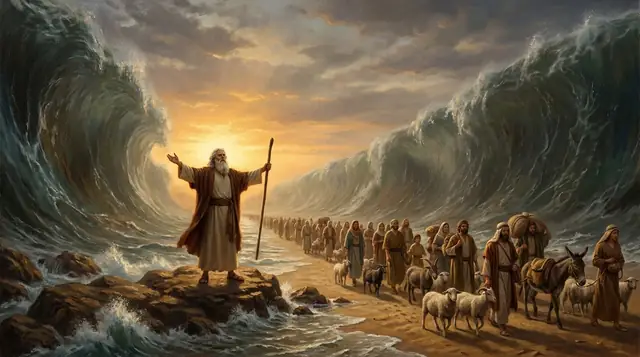
Look at the first row of that table for a moment. Two verses say Moses wrote, and the Pentateuch itself tells of his death. That tension, with no polemic intended, has fueled centuries of conversation among Jewish and Christian readers. To meet the man himself, the story of Moses follows his life from start to finish.
Who wrote the Psalms?
The Psalms are 150 poems and prayers with many hands behind them. The book is divided into five parts and was assembled over centuries. The headings in the Hebrew text name several authors, and about 50 psalms carry none.
| Name in the heading | Psalms | Note |
|---|---|---|
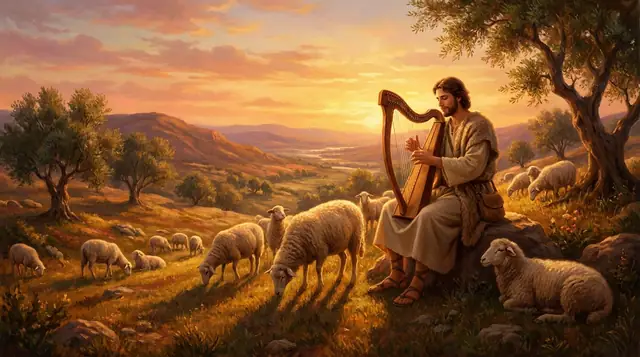
| David | 73 headings (the exact number varies a little by edition) | King, shepherd and musician. Includes Psalm 23 and Psalm 51 |
| Asaph | 12 (for example 50 and 73 to 83) | A Levite in charge of temple music |
| Sons of Korah | 11 (for example 42, 46 and 84) | A group of temple singers |
| Solomon | 2 (72 and 127) | David's son |
| Moses | 1 (Psalm 90) | The heading calls him the man of God |
| Heman and Ethan | 1 each (88 and 89) | Two sages named in the headings |
| No name | About 50 | Some place the latest ones after the return from exile |
In Hebrew, "of David" can be read as by David, for David, or in the style of David. That is why scholars discuss how many he wrote in person. What nobody disputes is the variety: praise, grief, anger, repentance and gratitude, written in very different eras. To start with the best loved, the most popular Psalms sorts them by the moment a person needs them.
Who wrote each book of the New Testament?
The New Testament has more names and more signed letters, and it also has open questions. The four Gospels, for example, do not name their author inside the text. The titles "according to Matthew," "according to Mark" and the rest were attached very early when the books were copied, and Christian tradition assigns them to those four men.
| Book or group | Author according to tradition | What the text says | What is debated |
|---|---|---|---|
| Matthew | Matthew, apostle and tax collector | Names no author in the text | Many scholars think Mark was written first and Matthew used it |
| Mark | Mark, companion of Peter | Names no author in the text | Exact date, and whether it was the first Gospel |
| Luke | Luke, doctor and companion of Paul | Luke 1:3 says the author investigated and wrote in order. Colossians 4:14 calls Luke a doctor | Date and sources |
| John | John, apostle | John 21:24 speaks of the disciple who testifies to these things and wrote them down | Whether that disciple is John the apostle or someone from his circle |
| Acts | Luke | Addressed to Theophilus, like the Gospel of Luke | Date of composition |
| Paul's letters (13) | Paul | Thirteen letters carry his name. 1 Corinthians 16:21 and 2 Thessalonians 3:17 mention his signature | Nearly everyone accepts seven (Romans, 1 and 2 Corinthians, Galatians, Philippians, 1 Thessalonians, Philemon). Ephesians, Colossians, 2 Thessalonians and the pastoral letters carry more debate |
| Hebrews | Unknown | Names no author | Paul, Barnabas, Apollos and others have been proposed. In the third century the theologian Origen said only God knew |
| James | James, brother of Jesus | Presents himself as a servant of God and of the Lord Jesus Christ | The early church had several men named James |
| 1 and 2 Peter | Peter | Both are presented in Peter's name. 1 Peter 5:12 mentions Silvanus as a helper | 2 Peter is the letter with the most doubts about authorship |
| 1, 2 and 3 John | John | The second and third are signed "the elder" | Whether all three come from the same author as the Gospel |
| Jude | Jude, brother of James | Presents himself as a brother of James | Date |
| Revelation | John | The author calls himself John and says he was on the island of Patmos | Whether this is John the apostle or another John |
Hebrews is the best-known case. Nobody signs that letter, and the ancient church already wondered about it. The most honest answer is still the third-century one: only God knows for sure. That takes nothing away from the letter. Many readers love it precisely for what it says about Jesus as high priest, with an author known or unknown.
Were they professional writers?
Mostly no, and that is a big part of the Bible's charm. According to tradition and to clues in the text, the authors included a shepherd who became a king (David), a court sage (Solomon), a priest who wrote in exile (Ezekiel), a tax collector (Matthew), a fisherman (Peter), a doctor (Luke) and a tentmaker who became a missionary (Paul). One book came out of hands that shared little except the story they tell.
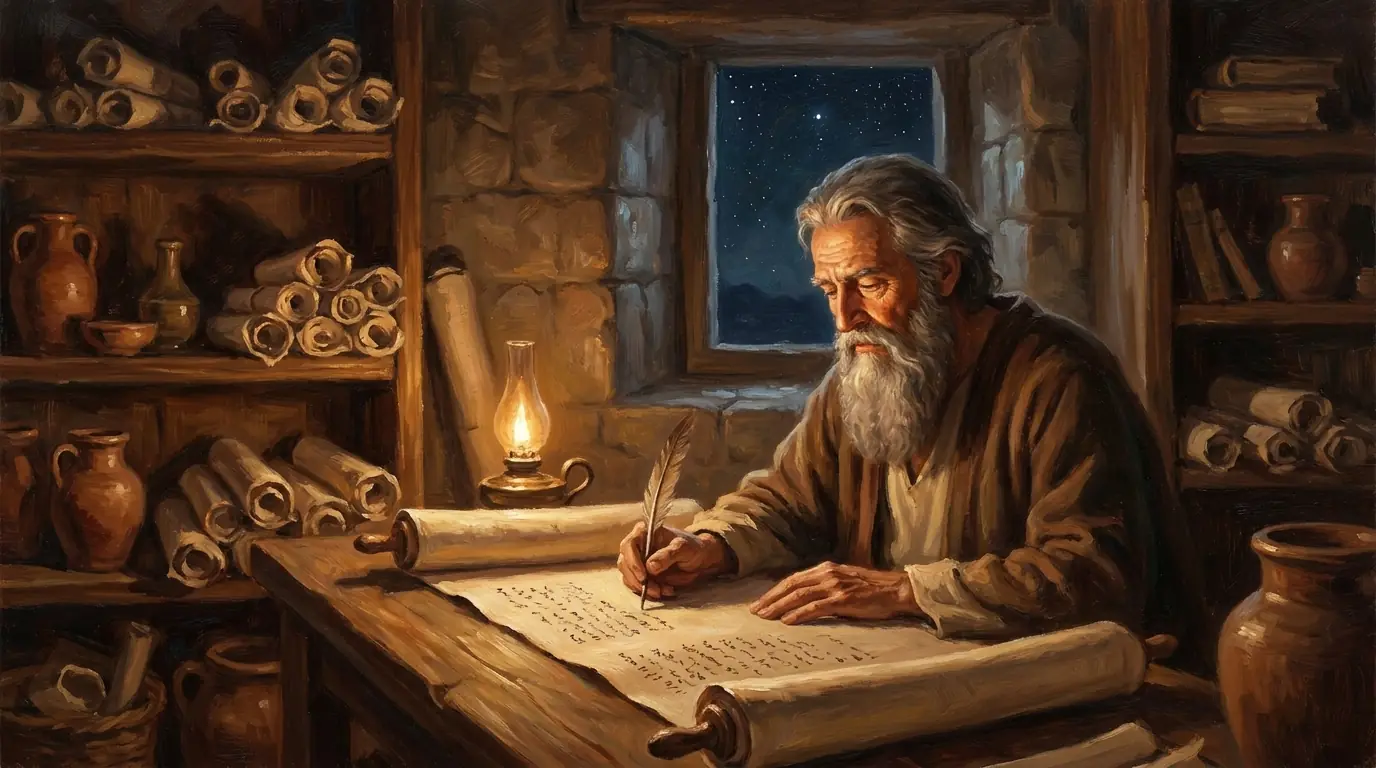
There is another detail almost nobody remembers. Ancient authors rarely wrote everything with their own hand. Many dictated to a scribe or secretary. Jeremiah dictated to Baruch:
“So Jeremiah called Baruch son of Neriah, and at the dictation of Jeremiah, Baruch wrote on a scroll all the words that the LORD had spoken to Jeremiah.”
Paul did something similar. In Romans 16:22 a man named Tertius introduces himself as the one who wrote the letter down, and in 1 Corinthians 16:21 and 2 Thessalonians 3:17 Paul says he adds the closing greeting in his own hand, like a signature. Luke, for his part, tells how he worked:
“Therefore, having carefully investigated everything from the beginning, it seemed good also to me to write an orderly account for you, most excellent Theophilus,”
That verse pictures a person who investigated, asked questions and organized what he found. Christians understand that God worked through that human process. Other readers, with another faith or none, see in it the portrait of an ancient historian. Both readings rest on the same verse.
What does it mean that the Bible is inspired?
Christians use the word "inspired" to say that God stood behind these writings. Exactly how that happened has drawn different answers within Christianity. Some traditions stress God's care over every word. Others give more attention to the personality and era of each author. Nearly all agree on something concrete: God spoke through real people, with their languages, their styles and their worlds.
Judaism reads the Tanakh, which matches most of the Christian Old Testament, with its own tradition of interpretation. Christians add the New Testament. The number of books also varies among Christian traditions, and that difference has its own history.
How did the Bible reach today's translations?
The original manuscripts, written by the authors themselves, have not survived. What exists are hand-made copies, often copies of copies. In practice the Bible reached us in five steps.
| Step | What happened | Example |
|---|---|---|
| 1. It is written | Authors, sometimes with scribes, put their texts on scrolls | Baruch and Jeremiah |
| 2. It is copied by hand | Scribes copy again and again, with great care, for centuries | The Dead Sea Scrolls hold very old copies of Old Testament books |
| 3. It is translated into ancient languages | The texts move into Greek, Latin and other languages | The Septuagint in Greek and Jerome's Vulgate in Latin |
| 4. It is printed | In the mid-1400s the printing press makes many identical copies | The Gutenberg Bible |
| 5. It is translated into modern languages | Translators work from the Hebrew, Aramaic and Greek manuscripts | In English, the King James Version (1611), the Berean Standard Bible and many more |
More than 5,000 Greek manuscripts of the New Testament survive, a very high number for an ancient text. The copies show small differences, almost always spelling or word order. Scholars compare them to reconstruct the original wording, and modern translations draw on that work.
A translation is the last link in that chain. Each one chooses between rendering word for word or idea for idea, which is why they sound different. The guide on which Bible translation to choose explains how the most popular English ones compare, including the Berean Standard Bible that Terra Gospel uses.
How to use all this when you read the Bible
Knowing who wrote each book improves the reading. When you open a letter from Paul, you know there is a concrete man with a city, friends and problems. When you open a psalm, you know it is the prayer of someone who really wept or rejoiced. When you open Genesis, you know it is an ancient text with a long history of transmission.
- 01Read the opening of each book. Many say who is speaking and to whom.
- 02Keep a clear translation at hand and check a second one when a passage gets hard.
- 03Read a little each day. At 10 minutes daily, how long it takes to read the Bible has the full math.